

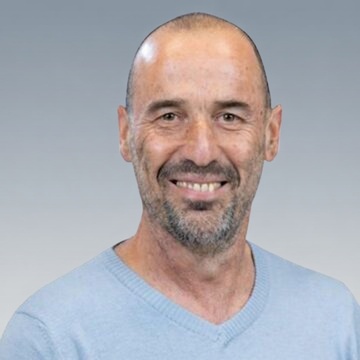
About
The long-term goal of my research and academic work is to develop a deeper understanding of various aspects of penology and imprisonment, with the explicit aim of integrating theory and empirical research with the development of correctional and sentencing practices that enhance sentencing policy, improve the well-being of incarcerated individuals and correctional staff, and increase prisoners' prospects for successful rehabilitation following release. To achieve this goal, I have been involved in several research projects with substantial scholarly and practical impact, as outlined below.
Over the past several years, my academic work has combined theoretical inquiry with empirical research and practical implementation, placing particular emphasis on translating theoretical and empirical knowledge into evidence-based practice. This work has contributed to both theoretical development and correctional practice, primarily in Israel but also internationally.
At the international level, I collaborated with the Prison Research Centre at the Institute of Criminology, University of Cambridge, on the development of new theoretical concepts and practical prison management strategies aimed at improving the well-being of both correctional officers and incarcerated individuals. In parallel, together with Professor Robert Enright (University of Wisconsin), Professor Nati Ronel (Bar-Ilan University), and Dr. Yitzhak Ben-Yair (Zefat Academic College), I examined the applicability of forgiveness therapy as an intervention for incarcerated individuals with substance use disorders.
In addition, I am involved in academic collaborations with scholars and practitioners from the United States (Boston University and the College of Liberal Arts and Sciences), Mexico (UNICACH), the United Kingdom (the University of Exeter and the University of Cambridge), and Australia (the University of New South Wales) to establish an international research network on music and justice. The network seeks to initiate international research on the effects of music on prisoners' well-being and to promote the exchange of scholarly and practical knowledge regarding the use of music in correctional settings and its contribution to reducing reoffending following release.
Furthermore, I was invited by the ERASMUS Programme and the University of Strasbourg to participate in an intensive training week, during which I met with Professors Christina Urdon, Jérémy Gauthier (Head of International Relations, Faculty of Social Sciences), Jérôme Bouché (Director of the DeviAnces Research Laboratory), Cécile Benbouriche, and Nicolas Amadio. The purpose of these meetings was to establish collaborative research projects in the fields of policing and police misconduct (an area in which I have supervised two doctoral dissertations), victimology, forgiveness, therapeutic interventions, and the rehabilitation of victims who later became offenders.
I also serve on the editorial boards of three international peer-reviewed journals, including The Prison Journal, one of the leading journals in the field of correctional research.
At the national level, my work has included several major initiatives. First, together with Professor Nati Ronel, I established Israel's first university-based prison research laboratory, designed to facilitate the continuous collection and analysis of large-scale data on prison life. Although this project concluded approximately one year after its inception due to internal organizational circumstances within the Israel Prison Service, it represented a significant step toward establishing a long-term prison research infrastructure in Israel. Similarly, Professor Ronel and I developed the "Smart Therapeutic Community" model at Retorno, a therapeutic community for individuals with substance use disorders.
Second, I conducted pioneering research on learning disabilities in prison, which transformed the conceptual understanding of the rehabilitation of incarcerated individuals with learning disabilities and led to the development and implementation of new assessment and intervention tools currently used throughout the Israeli prison system.
Third, I carried out a series of pioneering studies on women's imprisonment that generated new theoretical and practical insights into incarcerated women's unique needs and the characteristics of female prison subculture.
Fourth, together with Dr. Nina Suleiman, I conducted innovative research on correctional officers' well-being, contributing to a better understanding of the challenges they face and generating new ideas regarding their professional training and organizational support. In recognition of this work, the Israel Prison Service invited me to serve as a member of its first strategic advisory forum for the redesign of Israel's women's prison.
Beyond these activities, I am currently involved in several additional research initiatives, including evaluating the impact of participation in and listening to inmate-produced prison radio programs ("Radio Focus") on prisoners' quality of life; examining the effects of different musical genres on prisoners' well-being; investigating the subculture of nightclub strippers; and studying ways to strengthen public legitimacy of, and trust in, the police, particularly among at-risk youth.
Overall, my research seeks to advance both the theoretical and empirical understanding of penology, prisons, criminal justice, and prisoner rehabilitation.
I received my Bachelor's degree in Criminology from Bar-Ilan University and completed both my Master's and Doctoral degrees at the Hebrew University of Jerusalem. To date, I have authored or co-authored six books, and my research has been published in leading international peer-reviewed journals.
Finally, I have supervised more than 30 Master's students and 15 doctoral candidates.